
It’s Too Expensive To Win…
It’s too expensive to operate in the USA
Lets take a look at some infrastructure projects and their costs
1. East Side Access (NYC Rail Project)
Project is to connect Long Island Rail Road to Grand Central Terminal
Original estimate (2000): $3.5 billion
Final cost (2023): ~$11.6 billion
What’s crazy is that it is one of the most expensive rail projects per mile ever built and it’s only a few miles long.
2. Boston “Big Dig”
Official name: Central Artery/Tunnel Project
Project:
- Put Boston’s main highway underground
- Build tunnels and bridges through downtown
Original estimate: $2.8 billion
Final cost: ~$14.6 billion (over $22B including interest)
Problems:
- Massive delays
- Structural issues and leaks
- One ceiling collapse killed a motorist
Remember when the ship hit the bridge in Baltimore? Is it repaired? Not yet. The Francis Scott Key Bridge in Baltimore is not yet repaired in the least. While the cargo ship Dali was removed and the shipping channel fully reopened in June 2024, the bridge itself was destroyed. A new replacement bridge is currently being planned and is expected to be completed around 2028, with costs estimated at roughly $2 billion.
3. California High-Speed Rail
- Project: Bullet train from San Francisco → Los Angeles
- Length: ~500 miles
Back in 2008 the original estimate ~$33 billion
Now the current estimated cost: $100–128+ billion (still a huge variance).
Still incomplete after ~16 years Only a Central Valley segment is under construction so far, and the full line has no firm completion date. This is one of the largest cost overruns in modern infrastructure history.
Why U.S. Projects Are So Expensive
Economists studying this problem usually cite several structural reasons:
1. Permitting and environmental reviews
Large projects can take 10–15 years just to approve.
2. Litigation
Any group can file lawsuits that halt construction. In fact, there’s a massive industry formed around nothing but lawsuits–same as the whole new legal sector for divorces
3. Fragmented authority
Multiple agencies control a single project.
4. Consultant layers
Projects often involve:
- engineering firms
- design consultants
- environmental consultants
- legal teams
The bureaucracy is baked into the cake. It’s like the saying “the purpose of the system is to do what it does”.
5. Union labor rules
Labor costs are far higher than in many countries.
Money Printer Syndrome
The aforementioned and below figures are only made possible because of economic distortions that are the result of detaching from the a gold standard. Without a sound money to pin all commerce upon, every single agreement and dealing with each other because irrational and distorted.
Some of these numbers make the prior construction failures look like pocket change… Six shockingly inefficient numbers from the World’s number one powerhouse
1. Poor health losses are immense
- Chronic diseases account for 90% of the $4.9 trillion the U.S. spends on health care
- $575 billion per year in lost productivity from illness, disability, and reduced work performance.
- Roughly 1.5 billion workdays lost annually due to sickness
- If there was no chronic disease and this money were saved and redeployed as a country, it’d be the 4th largest economy in the world.
2. Iraq War (just this war)
Direct spending by the U.S. government:
- Roughly $1–2 trillion in military operations depending on accounting.
But when economists include:
- veterans care
- interest on borrowed money
- long-term military costs
Many estimates rise to $3–6 trillion total cost. That is one of the most expensive wars in modern history.
3. Prison System Cost
The U.S. has the largest incarceration system in the world.
Annual costs:
- ~$80–100 billion per year for prisons and jails.
Other related costs (policing, courts, probation) push the total criminal justice system to about $270–300 billion annually. About 2 million people incarcerated at any given time.
4. The Opioid Crisis
The opioid epidemic is extremely expensive.
5. “Education”
Total student loan debt:
- ~$1.7 trillion
Economic effects:
- delayed home ownership
- lower consumer spending
- slower family formation
6. Cost of Government Regulation
Some economic studies estimate the cost of regulatory compliance at $1.8–2 trillion per year.
This includes paperwork, legal compliance, and administrative costs for businesses.
Are the numbers improving now?
Not. At. All.
The other day I’ve read a claim that in merely 1 week, the US military through expenditures and losses have burned through approximately $100 billion dollars.

Below is another article I wrote highlighting the extreme cost of the defense missiles (the top notch being around $15M EACH)
https://statespeculator.substack.com/p/a-missile-monopoly-can-usa-partake
Based on recent forecasts, Alphabet, Microsoft, Amazon, and Meta are on track to spend around $650 billion in 2026 alone as AI investments accelerate. That’s the equivalent of building about 1,444 Northwestern Mutual Towers in downtown Milwaukee. And if we look at the low end of broader projections over the next few years, $1 trillion in Big Tech capex could equate to roughly 2,222 such towers across the US.

Put another way (big statement incoming): The money about to pour into tech could theoretically fund around 44 new 32-story glass towers in each of America’s 50 largest cities! Process that as you will—what do you think this means for innovation, infrastructure, and the economy with all this capital wasted?
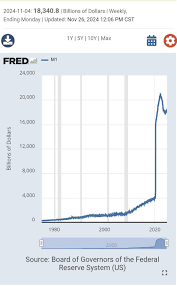
Of course all of these are simply examples of how extreme the budget and spending is relative to the actual results that one has to see.
Military officials warned internally that current interception rates could burn through stockpiles quickly.
- Some estimates suggested interceptor supplies could be exhausted within 7–10 days if Iranian missile attacks continued at the same intensity. U.S. forces are intercepting hundreds of missiles and drones fired at bases and allies across the region.
- Iranian drone → ~$20,000–$50,000
- Patriot interceptor → $3–4 million
So Iran can force the U.S. to spend 100× more money per interception.
