Oh.. those Russians..
I have been fortunate to have met many Russians over the years. Sometimes they’re the most innovative, spiritually-deep, clever, forward-looking, grounded people you’ll meet–and sometimes they’re people who are genuinely backward, emotionally unstable, illogical people who only have very, very simple lives and cannot break out of their own self-imposed misery. With the exception of Saint Petersburg, Moscow and a few other surprisingly large and sophisticated cities, Russia is a very poor and basic country.
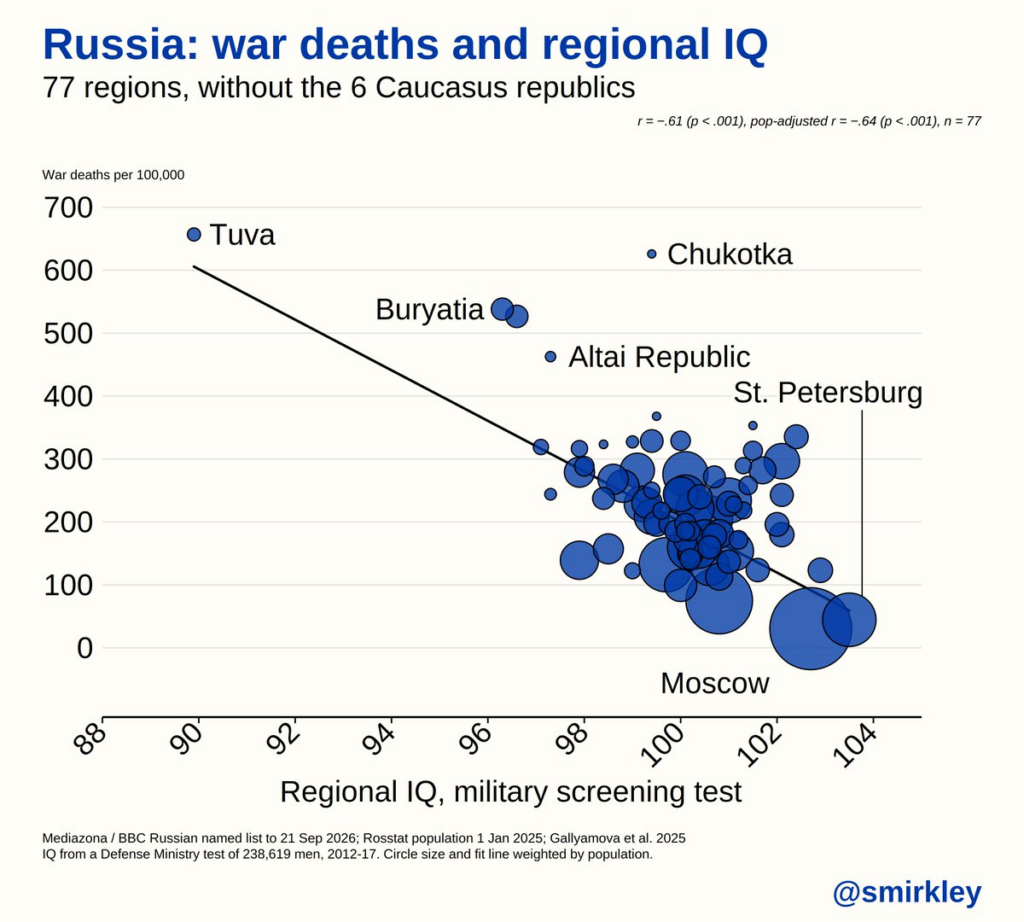
It comes as no surprise that Russia’s city and neighboring Oblasts (regions) have high IQ citizens on average (by a large amount in fact–I remember calculating that Moscow averages an IQ of 107 which is amazingly high on average).
With this said, there’s a relatively few number of Russians dying in the latest Ukrainian conflict from these wealthy Oblasts, but there is no shortage of loss of life of lower-IQ soldiers since the conflict began.
Adjusting for the population, if we look at the Ukraine conflict since 2022–Russian war deaths correlate –.64 with regional IQ. This is conditional upon someone removing the six Caucasus republics, all of whom have very low IQs but that Putin avoids using because of political and perhaps strategic reasons after Chechen Wars.
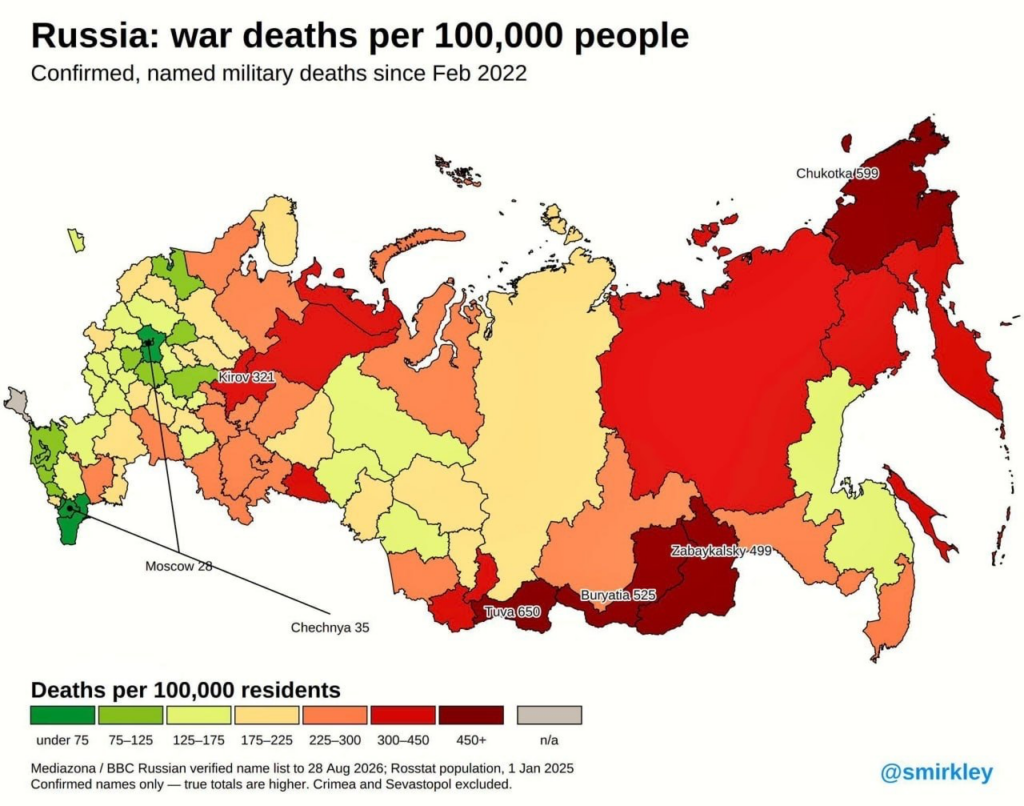
The chart below is more elucidating as it shows what percentage (proportional to their Oblast) of people have died–we can see the developed, “European” areas, West of the Ural Mountains of Russia have had less of a death rate, proportional to its population.
What the…
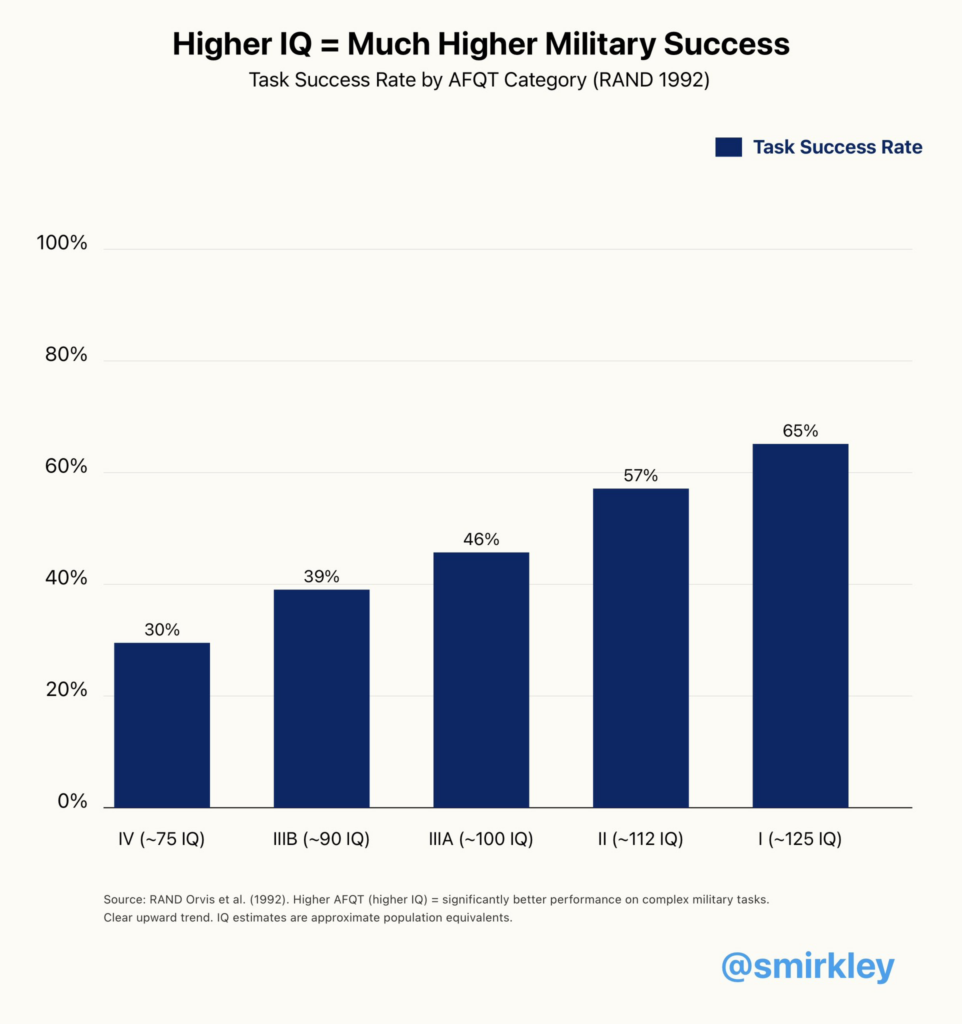
Given this, we may deduce that there is a controlled demolition ongoing inside of Russia. It has long been suggested that the only way to destroy Russia would be to weaken it from within, especially from its rural areas that contain less resources to defend. It’s also a hidden taboo among economists who don’t dare toy with psychology in their data with metrics like IQ; but the reality is that lower IQ individuals have a severe dampening effect on economic output, growth, and resilience. Put another way, Russia is a ‘stronger’ country with more intelligent citizens, on average.
Of whom who would perhaps be the most vulnerable locations to fracture the stability and viability of the Federation would be these red areas above. In other words, for the sake of retaining the Kingdom, Putin may be sacrificing a few castles, lest they are used against him at a later date.
Russians are different
This type of military behavior is not uncommon to Russia–and Russia is one of the most military-proficient nations on the planet (you have to be if you’re to defend the world’s largest country). This type of lose the battle but win the war has been done before, over 200 years ago.
When Napoleon entered Moscow on September 14, 1812, he expected the city’s leaders to meet him with keys to the gates and a surrender proposal. Instead, he marched into an eerie, silent ghost town.
About 95% of Moscow’s population had fled. Out of roughly 250,000 to 270,000 residents, only a few thousand remained (mostly the poor, the sick, or foreign residents). The Russian army, led by Mikhail Kutuzov, had deliberately retreated past Moscow, prioritizing saving their soldiers over saving the historic city.
Ethnicities
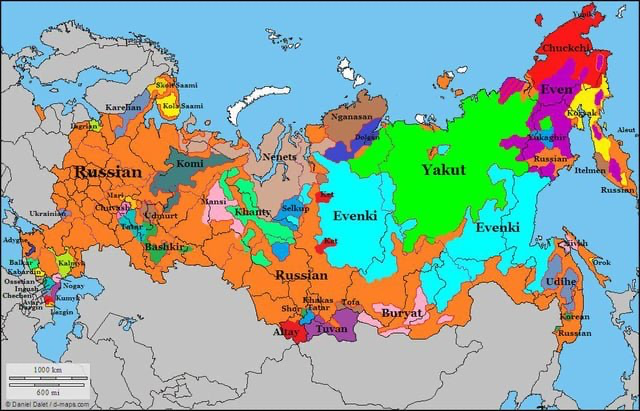
Further to my point that the Russian military is establishing a more stable internal nation, look at the ethnicities across the country above. These areas that are seeing high proportional deaths are not only related to lower IQ levels but they are not in fact Russian ethnically. As we know, homogenous countries are inherently more stable and far more difficult to create civil conflicts within.
Other Research
On the other hand, poorer regions like Tuva and Buryatia see far higher rates of death because of high enrollment army contracts pay better than scarce local jobs, military bases are located there, and prison recruitment is heavier. Wealthier urban areas such as Moscow offer more alternatives and easier avoidance.
Changes
Vladimir Putin has just signed a decree whereby the Russian Federation’s army will have a roster of nearly 2,500,000 soldiers. Almost half the population of all of Finland.
Demographics are changing everywhere… Are you prepared? Learn how On The Ball can support
Subscribe for more sensitive content like this that helps inform you to run a more sound international investment portfolio.
