Timing the Sector Amidst Geopolitical Chaos
AI Bulls vs. Perma-Bears

Reality: Narrow scope of opportunity…sailing the planet
Above is an explanation I have provided that because of constant misallocations, craze and hype, and credit expansion, there’s been so much lopsided investment that genuinely valuable, cash-flowing assets are accumulating simply waiting to be purchased. I believe the company below is one of those opportunities.
VLCC (Very Large Crude Carriers)
Without a tanker…everything Trump says here is meaningless. It’s the quiet connector we take for granted.
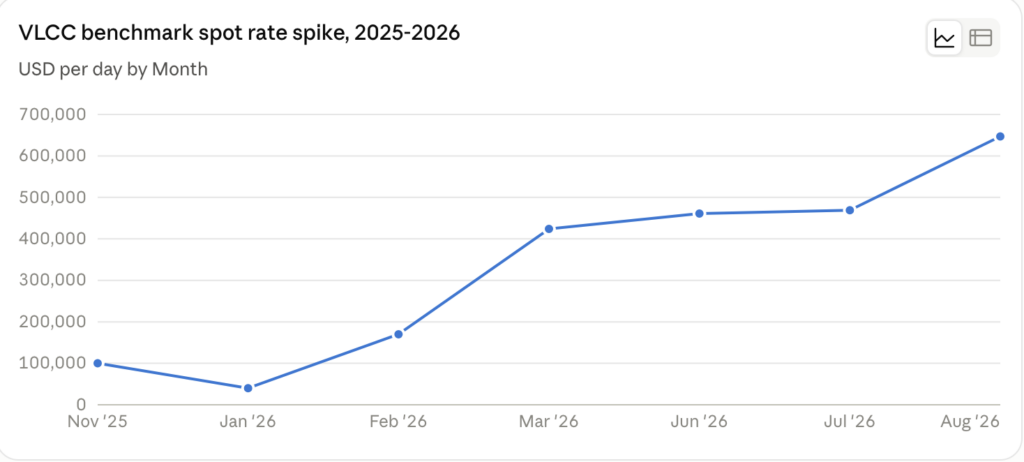
In a short period of time we’ve seen an explosion in profitability from tanker stocks. For instance, On 23 Jan 2026, Frontline tankers announced 7x 1 year charters at $76,900/day, per vessel for an estimated $28m gross income. Only six months later 13 July 2026, Double Hull Tankers Inc., announced a 3y charter for a 10 year old VLCC at $75,000/day or around ~$82m gross.
In fact, at the time of writing a new record has arrived for the tanker market. They’re chartering tankers at 656,000 USD per day. In the most recent investor presentation of DHT,, the daily cost of these tankers is around 23k USD. At these prices, the tankers are currently making 30 times the money daily. An absolute ATM on the Ocean.
Company
DHT is an independent crude oil tanker company. Their fleet trades internationally and consists of crude oil tankers in the VLCC segment. They operate through our integrated management companies in Monaco, Norway, Singapore, and India.
Crisis and Opportunity are the Same Word in Chinese
For years, uncertainty over future fuel technologies, environmental regulations and the prospect of peak oil demand discouraged owners from ordering ships. The result is a fleet that has grown far more slowly than many expected in prior years.
That caution has left the industry with limited fleet growth at a time when oil moves across changing trade routes due to a string of disruptions. For owners of VLCCs, the dynamic has created a supportive backdrop. DHT, which operates a fleet exclusively on the VLCC segment, has been among the beneficiaries.

Two Major Catalysts
Geopolitical Disrupted Routes: If a canal closes or conflict forces tankers to sail around Africa instead of through shorter straits (as seen recently with Middle East shipping disruptions), the global fleet is suddenly stretched thin because voyages take twice as long.
No Quick Fix: Oil majors must move their crude; they cannot wait and governments are in the same boat who don’t like restless constituents. If there are 10 loads of oil at a port and only 9 available ships, those oil companies will bid the price up to absurd maximums just to secure the final vessel.
Oil Demand
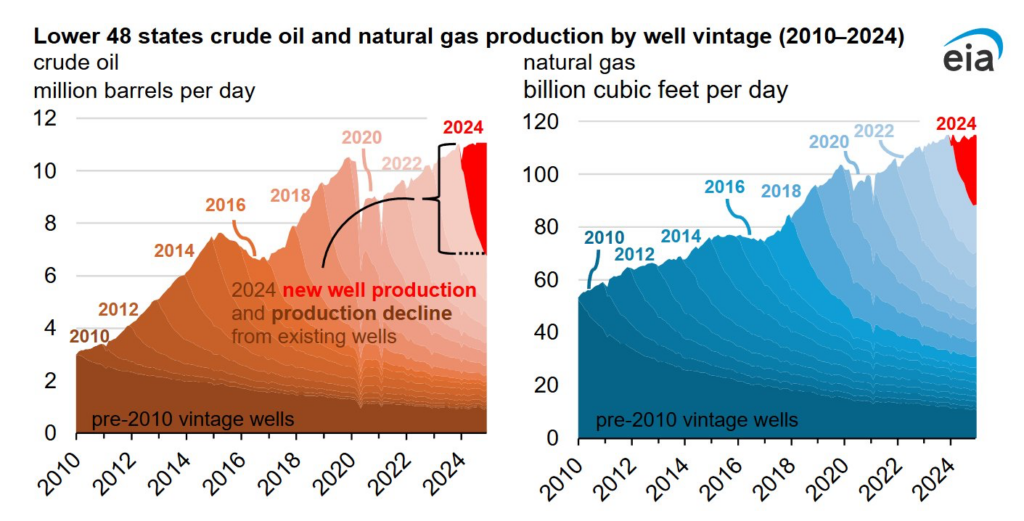
Global oil producers need to come up with 40mmb/d ($570B/y investment) of new supply by 2050 just to offset natural decline and meet a small demand increase.
Supply Crunch
Global energy supply as of April of this year had shot down an astounding 60% in the previous 60 days!
In attempt to avert anything close to the tsunami on its way, we’re going to see a massive demand for oil to show up to ports just before likely more lockdowns, travel restrictions and grounded flights to contain supplies.
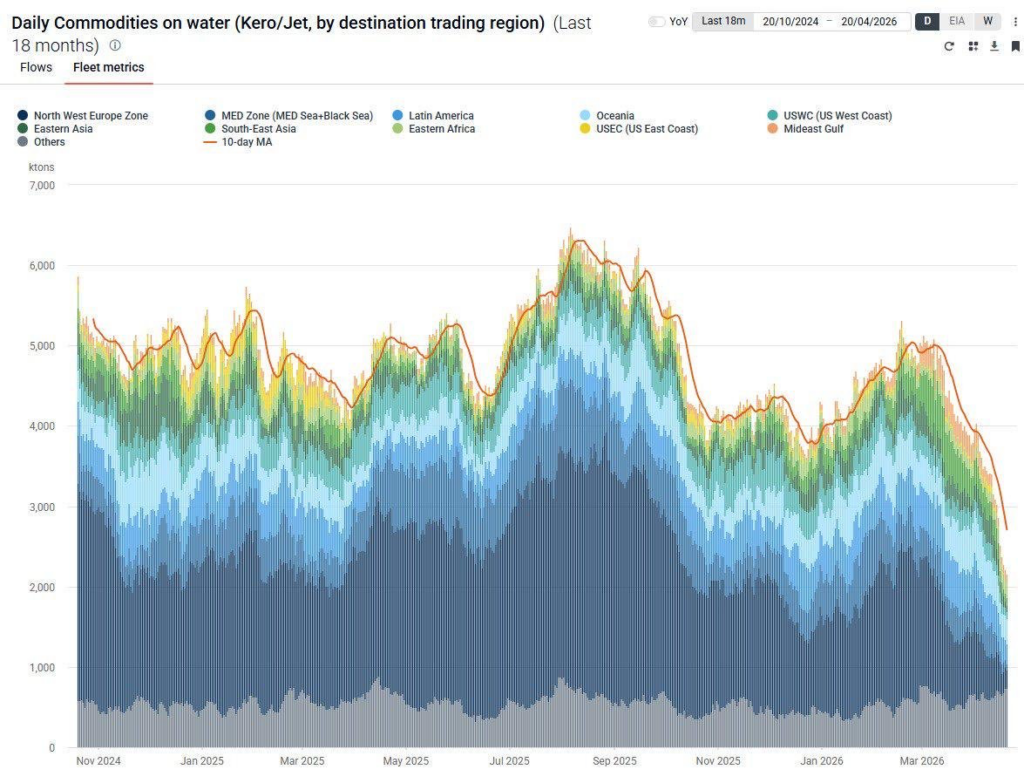
Tanker Rates
While oil supply demand is a great proxy for the tanker rates, it doesn’t tell the full picture: VLCC rates are exploding despite falling demand this year (and likely a falling demand as the depression becomes undeniable), because tanker economics run on ton-miles (barrels × distance), not barrels alone, and on effective supply.
Ton-miles over volume: sanctions on Russia/Iran and the Hormuz disruption have forced longer voyages — Atlantic Basin crude to Asia instead of nearby Gulf barrels, Cape of Good Hope detours instead of direct routes. The further the voyage, the higher the price tag even if its for the same amount of oil.
Effective supply is much tighter than it looks: the VLCC order book (across the industry) is only ~17% of the existing fleet. Nearly 20% of the global VLCC fleet is 20+ years old, and much of that tonnage has permanently shifted into the sanctioned “dark fleet,” never competing for mainstream cargoes again. The net reality is that real usable supply growth is closer to 1-3% year even when nominal deliveries look healthy on the backlogs.
War adds a scarcity premium on top of that: it’s not that there’s less oil to move — it’s that far fewer owners are willing to send ships through Hormuz and through other conflict zones. Security has a price. We’re all seeing this manifest into the rates that DHT accepts daily.
DHT achieved an average TCE of $126,700/day in Q2, including $162,600/day on its spot VLCCs. At these rates, the company generates enormous incremental cash flow.
Even better yet, for Q3: Approximately 48% of available spot days booked at an average of $139,700 per day.
Balance Sheet
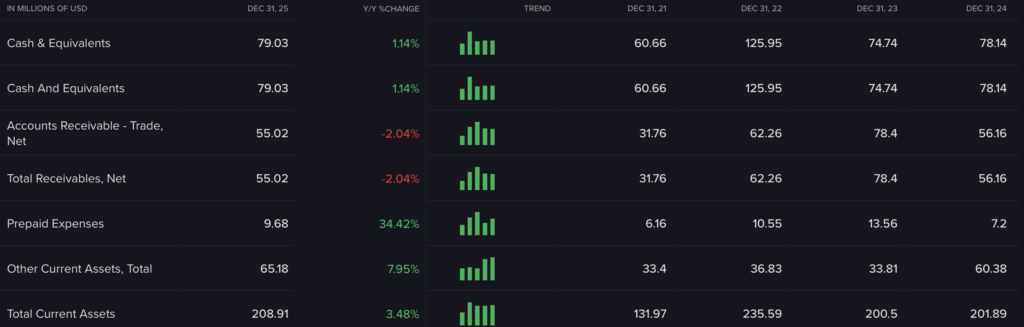
Already exposed to an operationally fluctuating market–DHT has focused on a more conservative balance sheet and limiting financial leverage.
Here is the last quarter to the far left and other 4 quarters behind it.
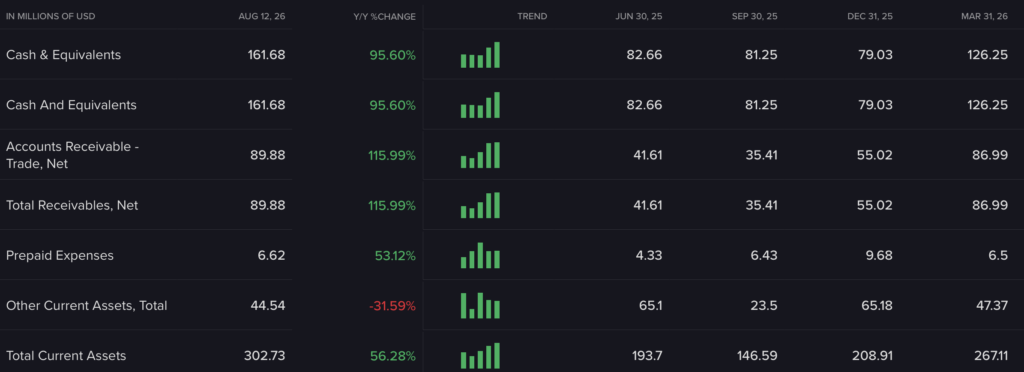
They have never been sitting on this much cash for a long time.
Value in the shares:
Book Value Per Share: 8.25
Earnings Per Share: 1.22
Cash Flow Per Share: 1.36
Dividend Per Share: 1.22
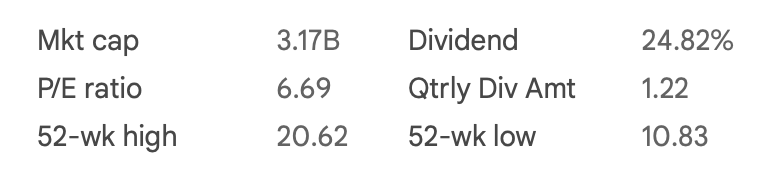
Since 2021, the share registry has been favorably without the need to issue more shares

Total long-term debts oscillate as the largest increase in their liabilities but they do not scream anything out of the ordinary for them.

Net Debt 273.12M (standard for the company).
Income
EPS$2.94
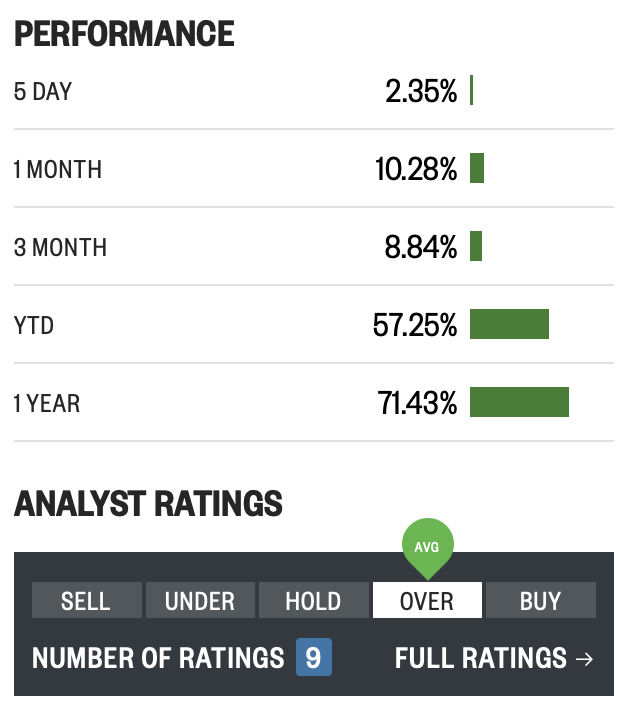
It’s worth noting that, Q2 2026 was DHT’s best quarter in its history, with $198.3M net income and $1.23 EPS. Even more impressive, first-half 2026 profit of $362.9M already exceeded its previous full-year record of $266.3M (and a massive increase from 100.2M a year before). Across the same time, revenues increased 91% to $471.5M. Revenues reflect an increase in demand for the Company’s products and services due to favorable market conditions.
Since their fixed costs are already covered, almost every single dollar of that “30x profit margin” flows (at $656,000/daily rates) straight to the net income line. And that bottom line means dividend investors are happy.
A nice trend in dividends handed back to shareholders amid higher and higher freight rates.
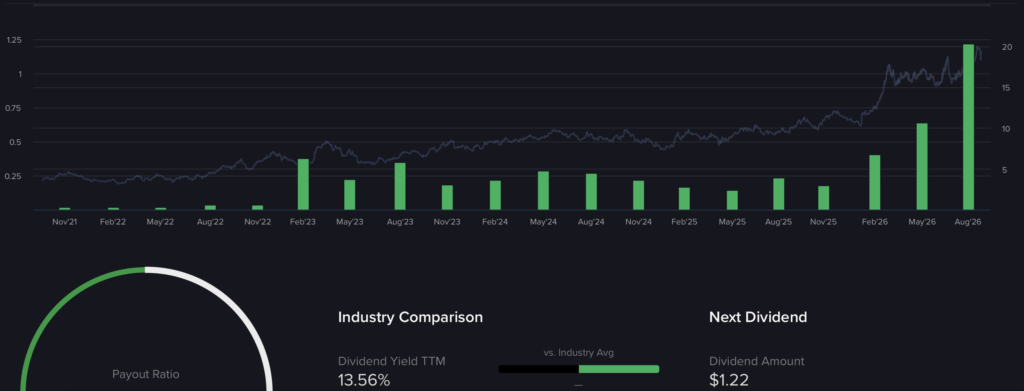
Dividend per share increased from $0.39 to $1.86.
This is the key point worth highlighting, what does this company do after it pays its operating expenses, its debts…it simply returns the excess to shareholders. We’re facing a situation where the more chaos in the world, the more rates will remain elevated for more cash flow and the bet, is continued dividends for us.
Boring Businesses can Grow?
After all, right now the % OF FLOAT SHORTED is a high 7.37%
DHT entered the current upcycle with financial capacity and has already expanded its fleet. The company has taken delivery of four new-build VLCCs this year and recently secured another vessel for delivery in the early part of 2028. DHT has completed its 2026 new-building program, adding four modern VLCCs, while selling older tonnage. The new vessels should have better fuel efficiency and lower operating costs while increasing DHT’s earning capacity even further.
We can see this represented as a jump in their capital expenditure in recent years.
However, it’s worth considering that while this is a benefactor of crisis–if the crisis extends for too long or too aggressively, then it ultimately damages the flow of cash for VLCC companies like DHT (since there’s little volume of not willing, but able, buyers).
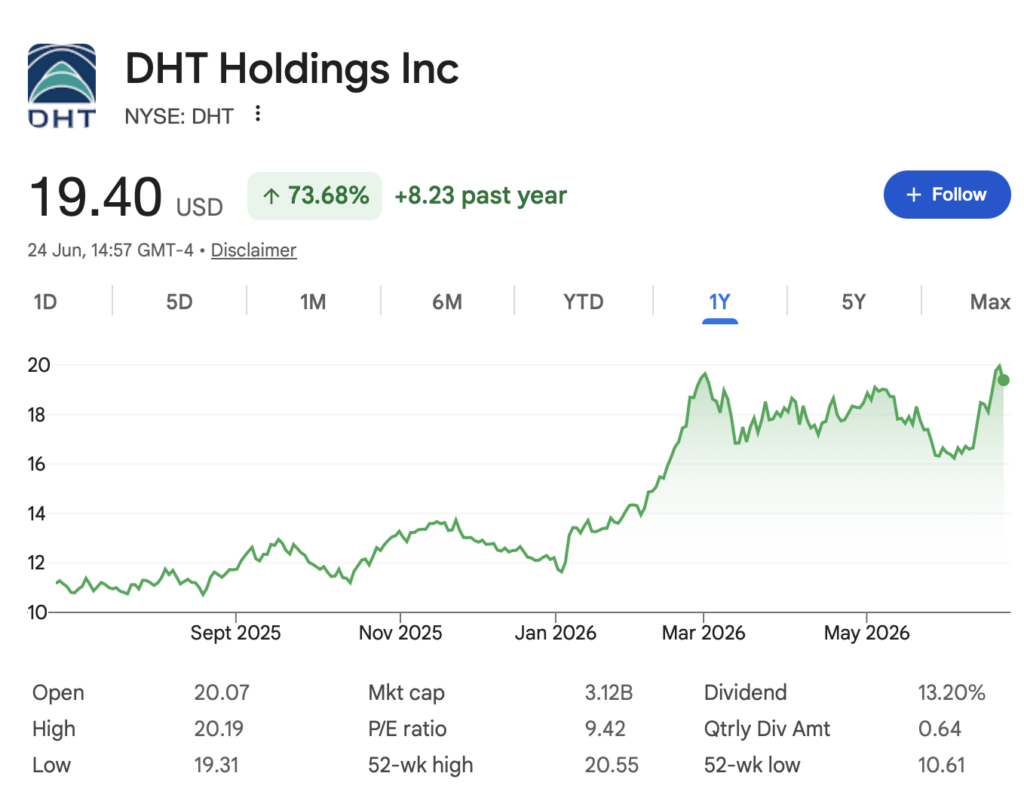
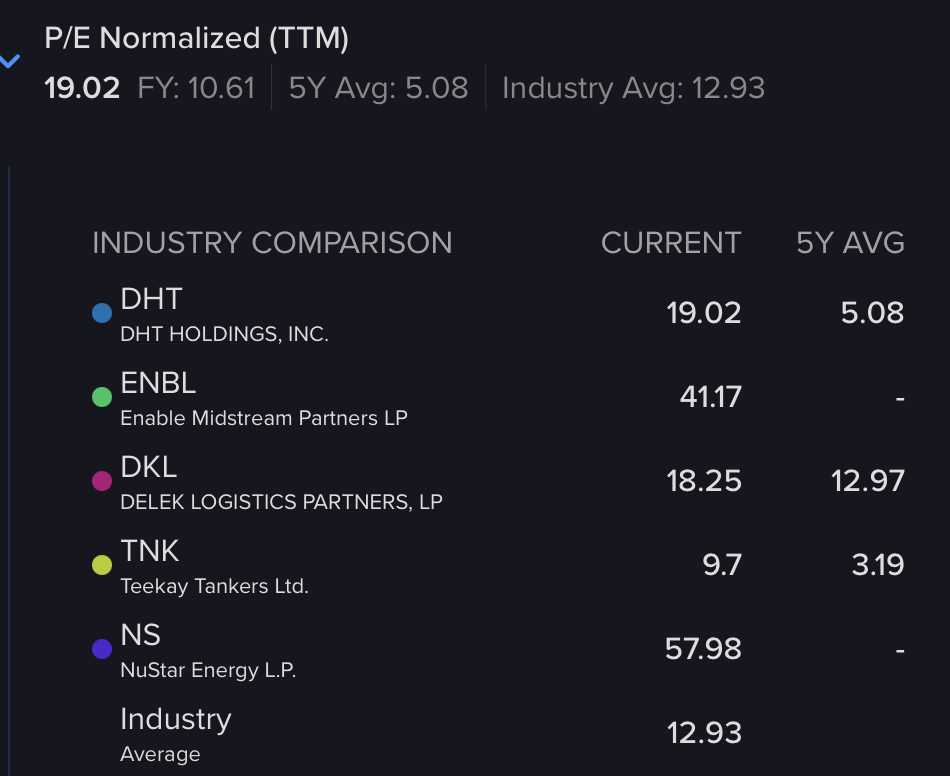
Right now their P/S and P/B has grown in recent years and their P/E trades above average for the sector–but the fundamentals are still solid.
Fund Managers Are Into It

82.34% of the shares owned are done so by institutional investors.
…Being well above the 200day MA, it demonstrates strong, sustained institutional momentum
Something worth noting, is that the experts in the field also own their chunk of the company as a strategic entity.

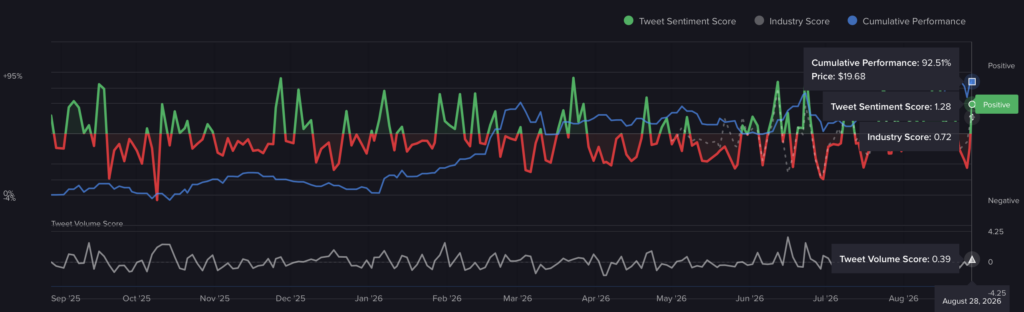
Tweet Sentiment in Line with Performance

Are you diversified? Are you taking advantage of the commodity boom?
To complement the written work, I offer separately managed accounts
Closing
AI is the hype–tech this, tech that; but amid the noise and distractions, there are companies that sailing a long through the economic crises just fine, pardon the pun.
The crisis of global trade uncertainties and dynamics of the oil tanker industry continues to push day rates higher all while costs are largely fixed for these VLCC operators like DHT. The reality is that a country cannot afford to go without oil as it’s the lifeblood for their economy (meaning they’ll keep paying). For the moment, guidance supports higher rates, higher growth, a new fleet coming on air, more dividends and institutional investors are a long for the momentum ride.
Right now, despite any short-term volatility, we’re in a hot moment for oil tankers who are glad to reward their shareholders. DHT Holdings is also one of these players to support investors with a strong balance sheet, too.
Thank you for reading!
