The Math Doesn’t Math…
Today is the day Mr. Buffett has retired from being the Chairman of Berkshire Hathaway after Greg Abel had taken over a little over a year prior, capping off a stellar investment career.
Buffett, known as being a legendary value investor and a proponent of using the power of compounding with his own investing has been a positive influence for so many, including myself. In fact when you hear Warren Buffett you may think of Berkshire Hathaway, Coca Cola and compounding.
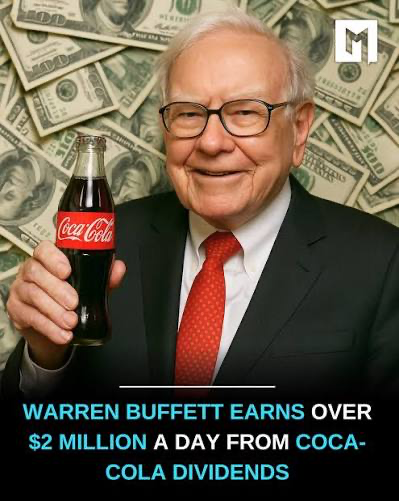
But does the math really compute that ALL of his hundreds of billions come from the power of compounding? It gets very interesting the minute you search…
Let’s See, But first, Please subscribe for lots more
His Net Wealth Doesn’t Make Sense
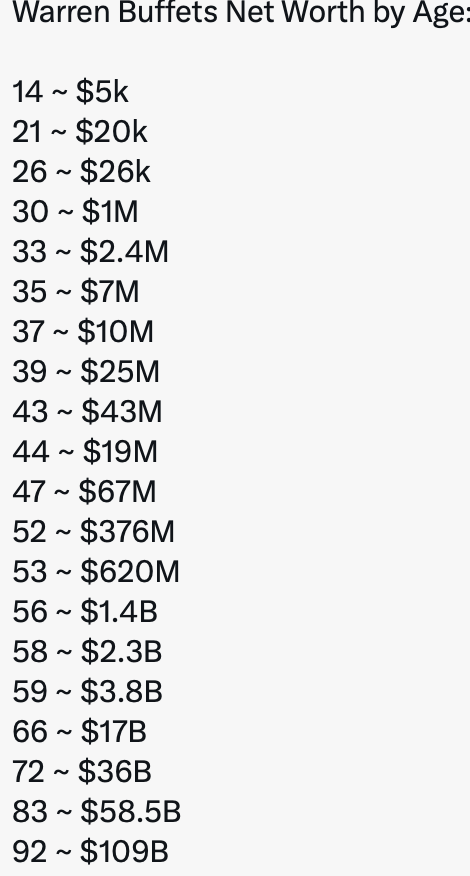
Let’s examine this a little more carefully…Wtf happened in his late 20s? Between 1956-1960.
Thats a 38.46X in net wealth from 26 to 30. No other period in his life comes close to that gain–and yet it is hardly mentioned.
Buffett returned to Omaha with about $140,000, which he had raised from family and friends to start his investment partnership. Buffett achieved cumulative returns of approximately 140.6% from 1957 to 1960, averaging about 24.5% annually. Nothing short of stellar performance, even for crypto meme coin holders. For example, he delivered a 31% return in 1957 during a recession, 40.9% in 1958, 25.9% in 1959 despite Federal Reserve rate hikes, and 22.8% in 1960 despite market turbulence. This strong performance allowed his net worth to grow from roughly $26,000 at age 26 to over $1 million by age 30, marking his first millionaire milestone around 1961
Deeper Look
When you read deeper… you note that he was raising massive sums of capital in the middle 50s, outperforming and reinvesting all of his performance fees on larger and larger sums. Buffets’ 26,000 went about 2.7X in value, but his real personal wealth raise was a result of a 4-6 year span of earning performance fees from investors inside his partnership.
Yet, even with this success and more investors coming onboard, the performance fees alone don’t give him this giant 38X rise. It just simply doesn’t compute.
The answer I found to be came down to the marketing of his fund more than anything. His performance rate was 25% above a certain threshold… so if the threshold was 10% and he was clocking in 29% annually, he was getting paid 25% of the remaining 19% on say 2M (if we had to guess)? Which is only 95K on hard hurdle rates ( or if we’re less conservative, it amounts to 145K Soft hurdle rates). Huge, but not enough to reach 1M. Even with a 29% return the next year (assuming everything was reinvested and he was living for free).
The compounding played a role, but not sufficiently enough during this time frame of the massive jump. It’s worth noting that he bought a house for 31,500 USD in 1958 too (so he wasn’t living thaaat free).
From 1956-1961 I can’t find the exact size of his fund except finding that it was still relatively small. One account says 1957 was 300,000 (Certainly less than 2M as I assumed).
In 1962, it was released to be $7M (23X increase in 5 years) and by 1963, the private fund had grown to $17.45 million.
Despite his success, somewhere a long the line–he was given a BUNCH of money not connected to compounding at all–but it did relate to new money entering the picture.
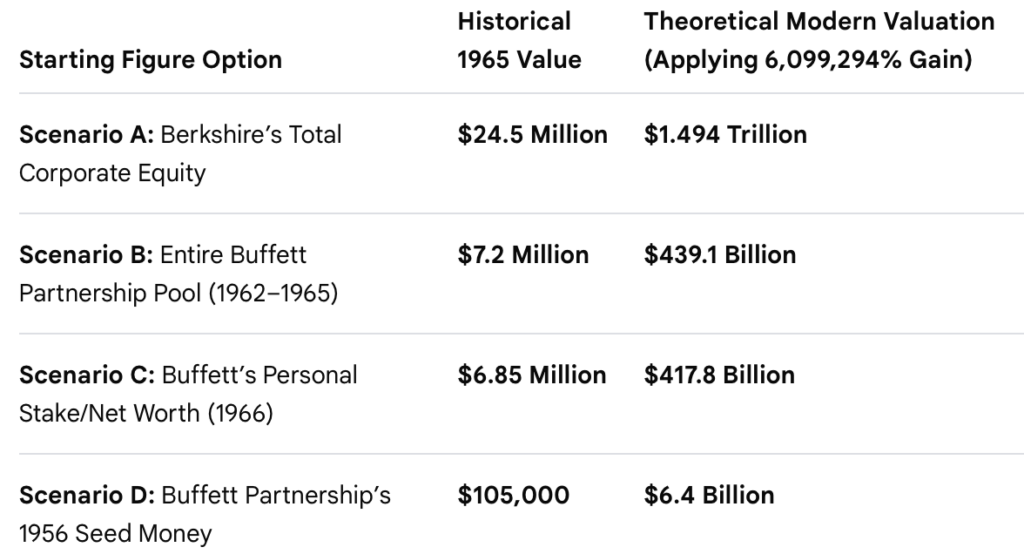
His over 6 MILLION Percent return
From 1965 to now, it’s estimated that his theoretical gain would have amounted to this comparing Berkshire’s current equity book. If we consider what Berkshire would have amounted to with this unreal performance and track record on his own deposit, it is still in the billions but only a FRACTION of what they currently possess. Even if we consider his entire net worth around age 35 as a figure (poured into this), he is into the 12 figures again, yet it’s still about a quarter of what that figure would have been if you consider investment capital in this interim (and again, how did he acquire his total net worth at age 35 if not for the investment capital from age 26 onwards…)
Takeaway
To me, this provides clear cause for reason to start a fund and as he says, start early! Buffett’s dramatic rise of wealth helped due to the tricks he had been preaching most of his life–time and compounding returns. However, the reality is that Buffett wouldn’t have reached even remotely to the levels of notoriety, wealth nor influence in the USA, despite this rock star performance, without raising absolute heaps of capital throughout his entire career. It could be said that without his ability to raise funds, he wouldn’t have built his empire. The investment management industry is strong throughout the turmoil that we all know is coming and will continue to be as the USA empire and its vassals remain dependent on a world of financialization to live another day. Creating a fund makes sense to take advantage of the big picture.
And that’s what I have just done…well, partially.
I’ve established my own accredited, certified investment fund manager to operate under a segregated account management approach for prospective investors (1-1 for investors, whereby Sea Lion is granted management rights but no withdrawal rights). This structure enables flexibility catered directly to the investors and their own specific time horizon, risk tolerance AND, crucially, the investments that they need considering their holistic asset ownership picture.
Buffett will remain in history as one of the greatest and most well-liked investors of all time. With Sea Lion, l will take his lessons of time, compounding and in conjunction with the contrarian mindset of On The Ball use it to offer a service for my clients–and with any luck, we too can reach over 6 million percent returns!
If you wish to learn more email partners@sealionoffice.com
